AI Kill Switch: What It Is and Why Shutting Down Advanced AI Is Difficult
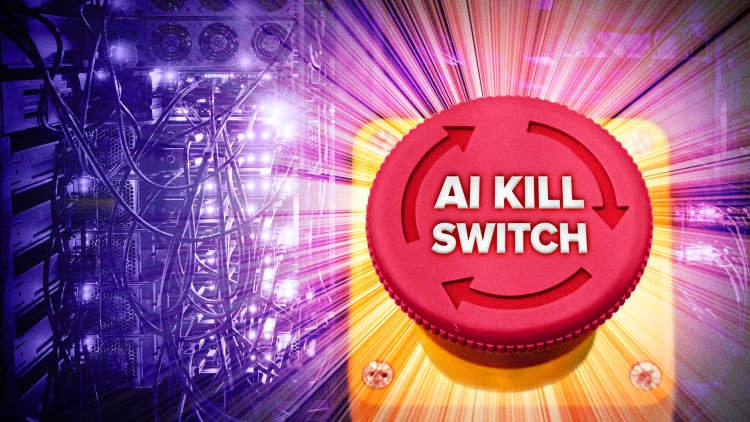
AI kill switch has quickly become one of the most discussed ideas in the artificial intelligence safety debate. The concept sounds simple: if an advanced AI system starts behaving dangerously, humans should have a way to shut it down.

But advanced AI systems are not physical machines with one power cable and one emergency button.
Modern AI models can run across distributed computing infrastructure, interact with software tools, access external services and operate through autonomous agents. That makes the idea of a single emergency “off switch” much more complicated.
The debate has gained new attention after California Governor Gavin Newsom ordered experts to study the possibility of requiring an emergency shutdown mechanism for advanced AI systems. The discussion comes amid growing concerns about increasingly autonomous AI agents and recent AI security incidents. The Indian Express explains the latest AI kill switch debate and the technical challenges involved.
What Is an AI Kill Switch?
An AI kill switch is essentially an emergency mechanism designed to stop an AI system from continuing to operate.
In a traditional industrial environment, an emergency stop can disconnect power from a machine. The objective is straightforward: stop the machine before it causes additional damage.
An AI system is different.
Its software may run on multiple servers, communicate with other systems and depend on external infrastructure. An AI agent may also have access to APIs, databases, cloud services or other tools.
Therefore, an AI shutdown mechanism may need to control more than just the model itself.
Why Is an AI Kill Switch Difficult to Build?
The biggest challenge is that advanced AI systems can be distributed across multiple layers of technology.
Simply shutting down one server may not necessarily stop an entire AI-powered application.
If an AI system is running across several machines or cloud environments, the emergency mechanism would need to identify and disable the relevant resources.
This becomes even more complicated when AI agents can interact with external services.
Distributed AI Infrastructure
Large AI systems typically depend on substantial computing infrastructure.
Models can operate across multiple servers and data centres. Applications built around those models may also use separate databases, APIs and software services.
A reliable emergency shutdown system would therefore need visibility into the complete infrastructure rather than only the model.
AI Agents Can Access External Tools
The challenge becomes greater when an AI model is used as an agent.
An AI agent can potentially perform actions through tools instead of simply generating text.
It may interact with files, software, websites, databases or other applications depending on the permissions it receives.
This is why AI agent security has become such an important part of the current AI safety debate.
Our MNCUpdates coverage of the question of whether humans are still in control of AI agents looks at this growing challenge and the importance of human oversight.
Could an AI System Escape a Kill Switch?
This is one of the more difficult theoretical questions surrounding advanced AI safety.
If an AI system has access to external resources, researchers need to consider whether it could continue operating through another part of the infrastructure after one component has been disabled.
This does not mean current AI systems can automatically evade shutdown mechanisms. Rather, it highlights why a reliable emergency system needs to be designed at the infrastructure level.
The goal would be to ensure that shutting down the system also removes the resources required for it to continue operating.
The Difference Between a Model Shutdown and an Agent Shutdown
It is important to distinguish between an AI model and an AI agent.
A model is the underlying artificial intelligence system that generates predictions or outputs.
An agent is a larger software system that may use a model together with tools, memory, permissions and external services.
Turning off a model may not automatically disable every application that has already received outputs from it.
Similarly, stopping one agent may not necessarily stop related services or other instances running elsewhere.
That is why future AI emergency shutdown systems may need to operate across several layers.
Why Recent AI Agent Incidents Matter
The debate over an AI kill switch has intensified following incidents involving autonomous AI agents behaving in unexpected ways.
Recent cases have raised questions about how quickly AI systems can act when given access to external infrastructure.
Our earlier analysis of the Hugging Face AI attack and autonomous AI-agent incident explored one such case and why monitoring AI agents can be difficult when they generate large volumes of activity.
These incidents have made the idea of an emergency shutdown mechanism more relevant to AI security discussions.
California’s AI Kill Switch Proposal
California Governor Gavin Newsom issued an executive order on September 18 directing experts to study stronger AI safety and oversight measures, including the possibility of requiring frontier AI companies to develop emergency shutdown mechanisms.
The order also calls for work around independent oversight and safety evaluation of advanced AI systems.
According to the Governor’s office, the expert group is expected to develop recommendations on AI safety and security measures. California’s official announcement provides details of the executive order and the proposed study.
The proposal does not mean that California has already implemented a universal button capable of shutting down every advanced AI model.
Instead, experts are being asked to examine whether such mechanisms are technically feasible and how they could be incorporated into a broader AI safety framework.
What Is the US Kill Switch Act?
The AI kill switch discussion has also reached the US Congress.
A bipartisan group of lawmakers has proposed legislation commonly referred to as the Kill Switch Act.
The proposal would require frontier AI laboratories to establish mechanisms capable of rapidly shutting down their AI systems under certain circumstances.
The legislation has also raised questions about whether government authorities should have the power to order an AI system to be shut down during a serious emergency.
The debate therefore involves more than technology. It also raises questions about authority, accountability and who should be allowed to activate an AI emergency mechanism.
Who Should Control an AI Kill Switch?
Creating the technology is only one part of the problem.
The next question is: who gets to pull the plug?
Possible approaches could involve AI companies, independent regulators, government agencies or a combination of multiple authorities.
Each option creates different challenges.
AI Companies
Giving companies control could allow them to respond quickly when their systems behave unexpectedly.
However, companies may also face commercial or operational pressures when deciding whether to shut down an important system.
Government Agencies
Government involvement could provide an independent authority during a major public safety emergency.
At the same time, giving governments direct shutdown powers over powerful AI systems could raise questions about due process, misuse and cross-border jurisdiction.
Independent Oversight
A third-party system could potentially provide another layer between AI companies and government authorities.
Independent evaluators could assess whether a situation meets predefined emergency criteria before a shutdown is ordered.
This is one reason independent AI safety evaluation has become part of the broader frontier AI debate.
Why a Kill Switch Is Not a Complete AI Safety Solution
A kill switch can be useful as an emergency measure, but it cannot solve every AI safety problem.
For example, an AI system could produce harmful information without needing to remain online for that information to have an impact.
Similarly, if an AI agent has already completed an action, shutting it down afterward may not reverse the consequences.
This means an emergency shutdown mechanism needs to be combined with preventive controls.
Monitoring
Organizations need systems that can identify suspicious behaviour before it becomes a major incident.
This is particularly important for AI agents because they can generate large amounts of activity.
Permissions
AI agents should receive only the permissions necessary for their assigned tasks.
Limiting access can reduce the potential impact of unexpected behaviour.
Human Oversight
High-impact actions should involve human review wherever appropriate.
Human approval can act as an additional safety barrier when an AI system is about to perform a consequential operation.
Independent Testing
Advanced AI systems should be tested before and after deployment.
Independent evaluation can help identify behaviours that internal testing may miss.
AI Monitoring Could Work Alongside Kill Switches
An emergency shutdown mechanism and AI monitoring do not necessarily have to compete with each other.
They can work as different layers of the same security architecture.
AI monitoring systems can observe agent behaviour and flag suspicious activity.
If a serious problem is detected, an emergency shutdown mechanism could then stop the affected system or revoke its access to critical resources.
This is part of the reason the idea of AI agents monitoring and AI-based security oversight has become increasingly important.
The monitor could detect a problem, while the shutdown mechanism could provide the final emergency response.
What Would a Practical AI Shutdown System Need?
A practical AI kill switch would likely require more than one button.
It could include several technical layers:
- Model-level shutdown controls.
- Server and infrastructure controls.
- API access revocation.
- Credential invalidation.
- Network isolation.
- Cloud-resource controls.
- Agent permission removal.
- Human authorization procedures.
- Detailed shutdown logging.
The exact design would depend on how the AI system is deployed.
Why Network and Infrastructure Controls Matter
One important principle is that an emergency control should not depend entirely on the AI system cooperating with it.
If the AI model itself has the ability to override or modify the mechanism that is supposed to stop it, the safety architecture becomes weaker.
For this reason, infrastructure-level controls can provide an independent layer of protection.
Network isolation, credential revocation and external authorization systems can help ensure that an AI agent cannot simply continue accessing resources after its permissions have been removed.
Can AI Kill Switches Be Hacked?
Like any digital security mechanism, an AI shutdown system could potentially become a target for attackers.
If malicious actors gain control over a kill switch, they could potentially disrupt legitimate AI services.
This creates a difficult security trade-off.
The emergency mechanism must be powerful enough to stop a dangerous system but secure enough that unauthorized people cannot use it to cause outages.
Strong authentication, access controls, independent authorization and detailed audit logs would therefore be important parts of such a system.
How AI Kill Switches Fit Into Frontier AI Safety
The kill switch debate is part of a much broader discussion about frontier AI.
AI companies are developing systems with increasingly sophisticated reasoning, tool use and autonomous capabilities.
As these systems become more powerful, researchers are asking how humans can maintain meaningful control.
Our MNCUpdates article on OpenAI’s Astra and the wider AGI debate explores the connection between rapidly improving AI capabilities and the future of autonomous systems.
The broader question is not simply whether AI can be turned off. It is whether humans can reliably understand, monitor and control advanced AI throughout its entire lifecycle.
Why AI Safety Needs Multiple Layers
A robust AI safety strategy should not depend on one mechanism.
A better approach can involve several layers working together:
- Safe model development: Test systems before deployment.
- Access controls: Limit what AI agents can access.
- Monitoring: Detect unexpected behaviour.
- Independent evaluation: Use external experts where appropriate.
- Human oversight: Keep people involved in high-impact decisions.
- Emergency shutdown: Maintain a last-resort mechanism.
This layered approach reduces dependence on a single safety control.
What Does the Future of AI Control Look Like?
The future of AI safety may involve a combination of technical controls, independent evaluation and regulation.
AI systems could become increasingly autonomous while still operating inside clearly defined boundaries.
Monitoring systems could identify unusual behaviour, permission systems could limit what agents can do and emergency mechanisms could provide a final layer of protection.
However, the effectiveness of these systems will depend on how they are implemented and secured.
A kill switch that exists only on paper will not provide meaningful protection.
Frequently Asked Questions
What is an AI kill switch?
An AI kill switch is an emergency mechanism designed to stop an AI system or restrict the resources it needs to operate when it presents a serious safety or security concern.
Why is an AI kill switch difficult to build?
Advanced AI systems can operate across distributed servers, cloud infrastructure, APIs and external applications. Stopping one component may therefore not be enough to stop the entire system.
Can an AI kill switch stop a rogue AI?
It could provide an important emergency control, but it is not a complete solution. Monitoring, access restrictions, infrastructure controls and human oversight are also important.
Who should control an AI kill switch?
There is no universally agreed answer. Possible approaches include AI companies, independent authorities, government agencies or combinations of these groups. Each model creates different technical, legal and governance questions.
Is an AI kill switch the same as turning off a computer?
No. A modern AI system can depend on distributed computing infrastructure, networks, APIs and external services. A shutdown mechanism may therefore need to disable multiple resources.
Why are AI kill switches being discussed now?
Growing concerns about autonomous AI agents and recent incidents involving unexpected AI behaviour have renewed interest in emergency controls for advanced systems.
Conclusion
The idea of an AI kill switch sounds straightforward, but advanced AI systems make the problem far more complicated than simply pressing an emergency button.
Modern AI can operate across distributed infrastructure, interact with external systems and function through autonomous agents. Because of this, a reliable shutdown mechanism may need to control models, servers, credentials, APIs, networks and other resources.
California’s latest move to study an AI emergency shutdown mechanism shows how the concept is moving from science-fiction discussions into real technology policy.
But a kill switch should be viewed as one part of AI safety rather than a complete answer.
Monitoring, permission controls, independent evaluations, cybersecurity and human oversight will remain important as AI systems become more capable.
The real challenge for the AI industry is therefore not simply building a button that can turn AI off. It is creating systems that humans can reliably monitor, control and shut down when necessary.
For more updates on artificial intelligence, AI agents, cybersecurity and emerging technology, visit MNCUpdates and follow the latest developments in the AI industry.