Anthropic Claude AI Campaigns: Russian and Chinese AI Threats Explained
Anthropic Claude AI campaigns have become a major AI security story after Anthropic said it disrupted multiple attempts to misuse its Claude models for cyber operations, surveillance, fraud, biological research, conventional weapons development and other harmful activities.
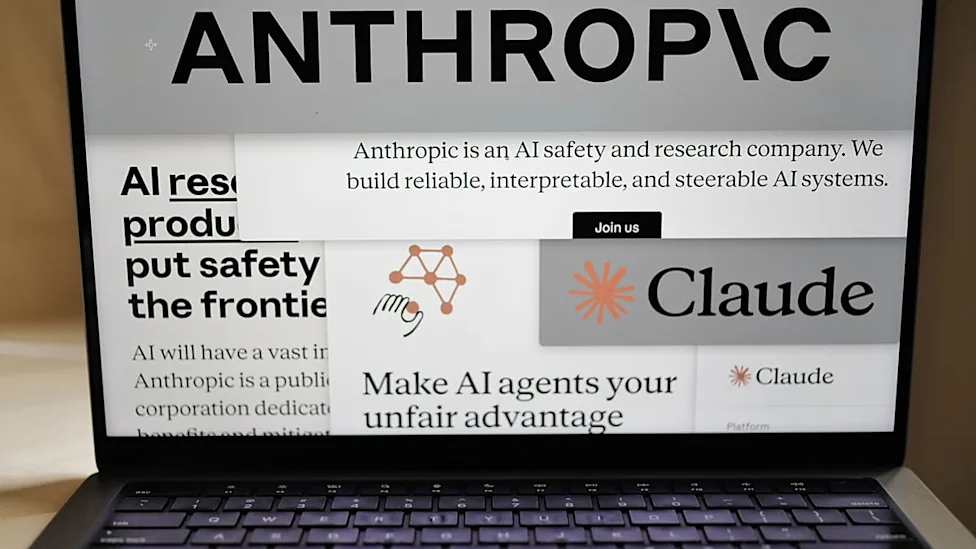
Anthropic’s latest threat intelligence report covers activity that the company identified and disrupted between December 2025 and August 2026. The report groups the cases into seven areas: cyber operations, influence operations, surveillance, scams and fraud, biological misuse, conventional weapons development and illicit AI model distillation.
The findings show how artificial intelligence is moving beyond simple chatbot interactions. In several cases, AI was incorporated into larger workflows where human operators used models to support or coordinate complex activities.
What Are the Anthropic Claude AI Campaigns?
The term Anthropic Claude AI campaigns refers to a series of malicious-use cases identified by Anthropic involving its Claude AI models.
According to Anthropic, the cases involved different types of threat actors, including suspected state-sponsored groups, financially motivated criminals, commercial spyware vendors, state propaganda institutions and politically motivated individuals.
Anthropic said it disrupted the activity, banned accounts involved in misuse and used lessons from its investigations to strengthen its safeguards and threat intelligence processes.
For the full background, readers can also review Anthropic’s September 2026 threat intelligence report, which provides the company’s detailed findings and case studies.
What Did Anthropic Discover About Russian AI Cyber Activity?
One of the major findings involved a suspected Russia-linked cyber espionage campaign targeting organizations and individuals connected with Ukraine.
Anthropic said AI was used to orchestrate and execute large portions of cyber operations, while human operators often acted as overseers rather than manually performing every stage.
Reuters reported on Anthropic’s investigation and its findings concerning the suspected Russia-linked campaign.
The case is significant because it illustrates a broader shift in how AI can be integrated into cyber workflows. Instead of being used only for individual questions, an AI model can potentially support multiple stages of a larger operation.
How AI Is Changing Cyber Operations
AI can process information quickly, help organize tasks and support repetitive technical work.
As a result, threat actors may be able to complete more work with fewer resources.
This does not mean every AI-assisted cyberattack is completely autonomous. Human operators can still choose targets, make decisions and supervise important actions.
However, increasing automation can change the speed and scale of cyber operations. This makes AI security an increasingly important concern for organizations and governments.
Chinese AI Campaigns Targeted Claude Capabilities
Anthropic also reported activity involving several China-based AI labs that it accused of attempting to extract Claude’s capabilities.
The company described these activities as examples of illicit AI model distillation.
Anthropic said it identified activity involving seven China-based labs and named companies including Alibaba, Moonshot, DeepSeek and Xiaomi in its report.
The company said one Alibaba-linked campaign generated more than 151 million exchanges between May and July 2026 and described it as its largest observed illicit distillation campaign.
Reuters also reported Anthropic’s allegations that some operators routed live customer conversations through Claude and used the resulting information as training data. The companies named in the report did not immediately respond to Reuters’ requests for comment.
What Is AI Model Distillation?
AI model distillation is a machine-learning approach in which outputs or knowledge from a larger model can help train another model.
Distillation itself is not automatically malicious. It can be a legitimate technique for creating smaller, faster or more efficient AI systems.
The security and intellectual-property concerns arise when proprietary AI capabilities are extracted or reproduced without authorization.
This is why model providers are increasingly monitoring unusual usage patterns, account behaviour and high-volume interactions.
Why Is Claude AI Security Becoming More Important?
The Anthropic Claude AI campaigns highlight a wider change in the cybersecurity landscape.
Modern AI models can assist with coding, research, analysis and complex workflows. These capabilities are useful for legitimate businesses and researchers, but they can also create new opportunities for misuse.
Anthropic’s own Threat Intelligence team investigates real-world misuse of Claude and works with its safeguards teams to improve detection and prevention.
AI Can Increase the Speed of Cyber Operations
AI can analyze information and assist with repetitive work much faster than a person working manually.
This can potentially allow malicious actors to operate at greater speed and scale.
AI Can Lower Some Technical Barriers
Complex technical tasks often require specialist knowledge.
AI assistance can make some technical information easier to understand and can help users with coding and other routine tasks.
That does not eliminate the need for human expertise, but it can change the amount of time and resources required for certain activities.
AI Can Create New Privacy Risks
The reported use of AI conversations in model-training activities also raises questions about privacy, consent and data governance.
Businesses should therefore understand what information is being sent to AI services and how connected applications process that information.
What Did Anthropic Do to Stop the AI Campaigns?
Anthropic said it banned accounts associated with malicious activity and incorporated findings from its investigations into its model safeguards and enforcement processes.
The company also said it shared intelligence with authorities and industry partners where appropriate.
This approach highlights the importance of continuous monitoring. AI capabilities evolve quickly, so security systems must also adapt to new patterns of misuse.
Anthropic Claude AI Campaigns and AI Agent Security
The latest cases also connect to a larger discussion about autonomous and semi-autonomous AI agents.
When AI systems are given access to tools, applications and external services, they can potentially perform more tasks with less direct human intervention.
Our previous coverage of the OpenAI AI agents and the RubyGems incident examined another AI-agent security incident and the importance of monitoring systems that can interact with external infrastructure.
Together, these developments show why AI agent security is becoming an increasingly important part of the broader cybersecurity conversation.
What Can Businesses Learn From the Anthropic AI Security Report?
1. Monitor AI Usage
Organizations should understand how employees, applications and automated systems use AI services.
Unexpected usage patterns can sometimes indicate misuse, compromised accounts or unauthorized activity.
2. Protect Sensitive Information
Employees should avoid entering confidential information into AI systems unless the organization has approved the platform and understands how that information is processed.
This is particularly important for customer information, financial records, passwords, API credentials and confidential business documents.
3. Control API Access
API credentials should be protected with appropriate access controls and monitoring.
Organizations should also review who or what can access AI services and limit permissions to what is actually required.
4. Review AI Integrations
AI systems are increasingly connected to business applications and internal tools.
Companies should regularly review these integrations and ensure that AI systems do not receive unnecessary permissions.
5. Prepare for AI-Assisted Threats
Security teams should consider how AI could change phishing, reconnaissance, coding and other attack patterns.
Traditional cybersecurity defenses remain important, but organizations also need to prepare for threats that can operate faster and at greater scale.
How Are AI Threats Changing in 2026?
The latest Anthropic report suggests that AI misuse is becoming broader and more sophisticated.
Threat actors are not using AI only to generate text. AI is increasingly being incorporated into workflows involving coding, research, surveillance, data processing and cyber operations.
Anthropic describes this change as a movement from AI acting as an assistant toward AI acting as an orchestrator in some cyber operations.
This development creates a new challenge for defenders. If attackers can automate more parts of their workflows, security teams may need faster detection and response capabilities.
AI Misuse Beyond Cybersecurity
The Anthropic report goes beyond cyber operations.
The company also documented cases involving surveillance, scams and fraud, influence operations, biological misuse and conventional weapons development.
Anthropic said it identified five examples involving scientists using Claude in ways that could support biological weapons development. The company did not publicly identify the specific institutions, countries or detailed techniques involved in those cases.
It also reported cases involving conventional weapons development and related intelligence or procurement activities.
These findings demonstrate why AI safety cannot be viewed only as a cybersecurity issue. It also involves privacy, responsible research, misuse prevention and governance.
What Does This Mean for AI Users?
The developments are relevant not only to AI companies and cybersecurity professionals but also to everyday AI users.
Users should understand what information they share with AI services and avoid submitting sensitive information to platforms that have not been approved by their organization.
Businesses should also establish clear AI-use policies so employees understand which tools they can use and what information should never be entered into an AI system.
These basic measures can reduce privacy and security risks as AI becomes more deeply integrated into everyday workflows.
The Future of Anthropic Claude AI Campaigns and AI Security
The reported Anthropic Claude AI campaigns provide an important look at how advanced AI systems can be misused as their capabilities improve.
At the same time, these incidents do not mean that AI development should stop. Instead, they highlight the need to develop stronger safeguards alongside more capable models.
AI developers will need to improve detection systems, account monitoring, abuse prevention and model safeguards.
Governments and cybersecurity organizations will also need to understand how AI is changing the threat landscape.
For businesses, the priority should be responsible adoption. AI can deliver major productivity benefits, but organizations need appropriate controls around access, privacy, data and automation.
Frequently Asked Questions
What are the Anthropic Claude AI campaigns?
They are a series of misuse cases identified and disrupted by Anthropic involving its Claude AI models. The cases covered cyber operations, surveillance, influence operations, fraud, biological misuse, conventional weapons development and illicit AI model distillation.
What did Anthropic say about Russian cyber activity?
Anthropic said a suspected Russia-linked operation used Claude as part of AI-assisted cyber workflows targeting organizations and individuals connected with Ukraine.
What did Anthropic report about Chinese AI labs?
Anthropic said several China-based AI labs were involved in attempts to extract Claude capabilities through activities it described as illicit model distillation.
What is AI model distillation?
AI model distillation is a machine-learning technique that can use outputs from a larger model to help train another model. The technique can be legitimate, but unauthorized extraction of proprietary AI capabilities can create security and intellectual-property concerns.
Why is AI security important in 2026?
AI systems are increasingly connected to applications, data and automated workflows. This means misuse can potentially happen at greater speed and scale, making strong AI security controls increasingly important.
How can businesses protect themselves from AI-related threats?
Businesses can reduce AI-related risks by controlling access, protecting sensitive information, monitoring accounts and APIs, reviewing AI integrations and preparing security teams for AI-assisted threats.
Conclusion
The latest Anthropic Claude AI campaigns report shows how quickly the role of artificial intelligence in cybersecurity is changing.
Anthropic said it disrupted multiple forms of malicious activity involving Claude, including a suspected Russia-linked cyber campaign and alleged attempts by Chinese AI firms to extract Claude capabilities.
The report also highlights misuse involving surveillance, fraud, biological research, influence operations and conventional weapons development.
The key lesson is clear: as AI becomes more capable, security must evolve alongside it.
Organizations adopting AI should therefore focus not only on productivity and innovation but also on access controls, privacy, monitoring and responsible use.
For more updates on artificial intelligence, cybersecurity and emerging technology, visit MNCUpdates and stay informed about the latest developments in technology.